A cup carrier only has one job, which is to get full drinks to a car or a doorstep without a spill, and it is surprisingly easy to buy one that cannot do it. Most ordering mistakes trace back to the same root cause: treating the carrier as a generic accessory rather than a part that has to fit specific cups, survive specific conditions and carry your brand at the same time. The errors below are the ones that lead to reorders, spilled drinks and wasted print budgets, and every one of them is avoidable with a few minutes of checking before the order goes in.
Mistake 1: Speccing by ounce size instead of rim and base
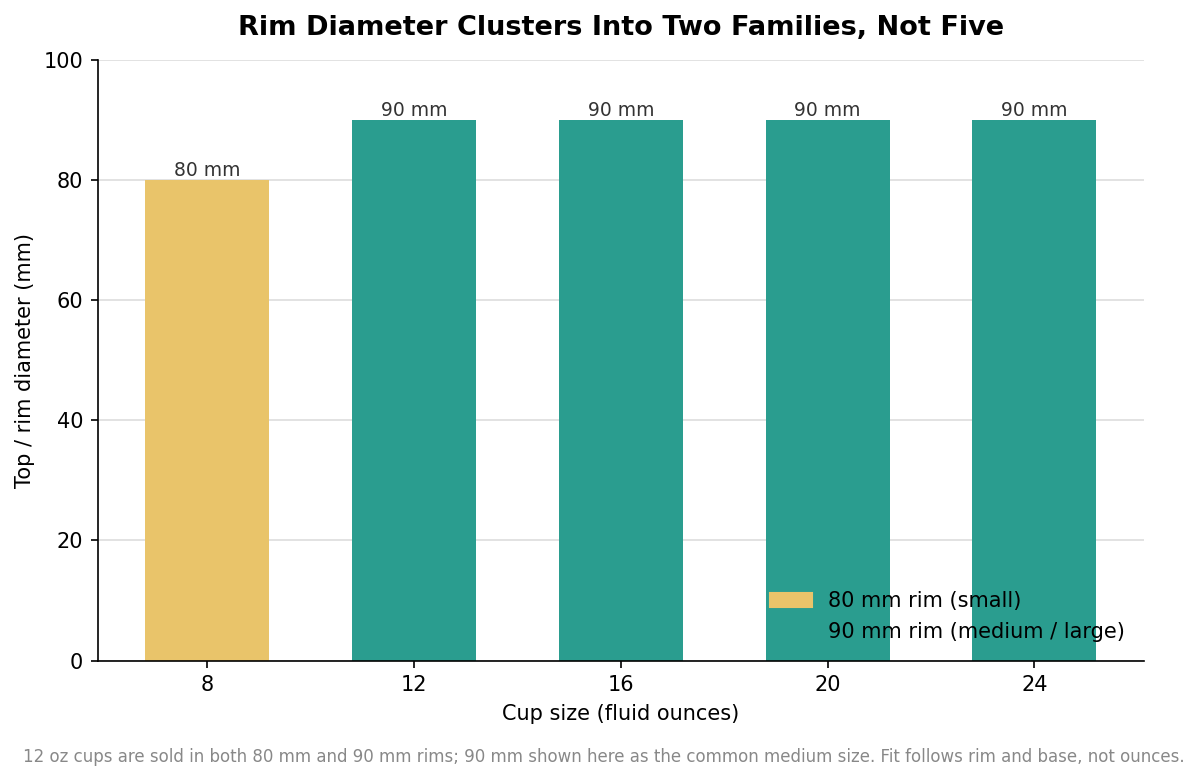
Ounces do not determine fit; the cup’s geometry does. Buyers routinely order a “16 oz carrier” and assume any 16 oz cup will seat in it, but a carrier grips a cup by its rim and its base, not its volume. Disposable cups actually cluster into just two rim families rather than a unique size for every ounce count: smaller cups tend to use an eighty-millimeter rim while most medium and large cups share a ninety-millimeter rim. That means a 12 oz and a 20 oz cup can share the same opening while two different 12 oz cups from different brands do not. Molded pulp carriers that cradle the lower cup often accommodate a wide span of sizes, which is why you see a single tray rated for anything from roughly eight up to forty-plus ounces, whereas paperboard trays with die-cut holes are matched to a narrower rim range. Before ordering, confirm the actual rim and base diameters of the cups you serve, not just their advertised volume.
Mistake 2: Forgetting height and the center of gravity
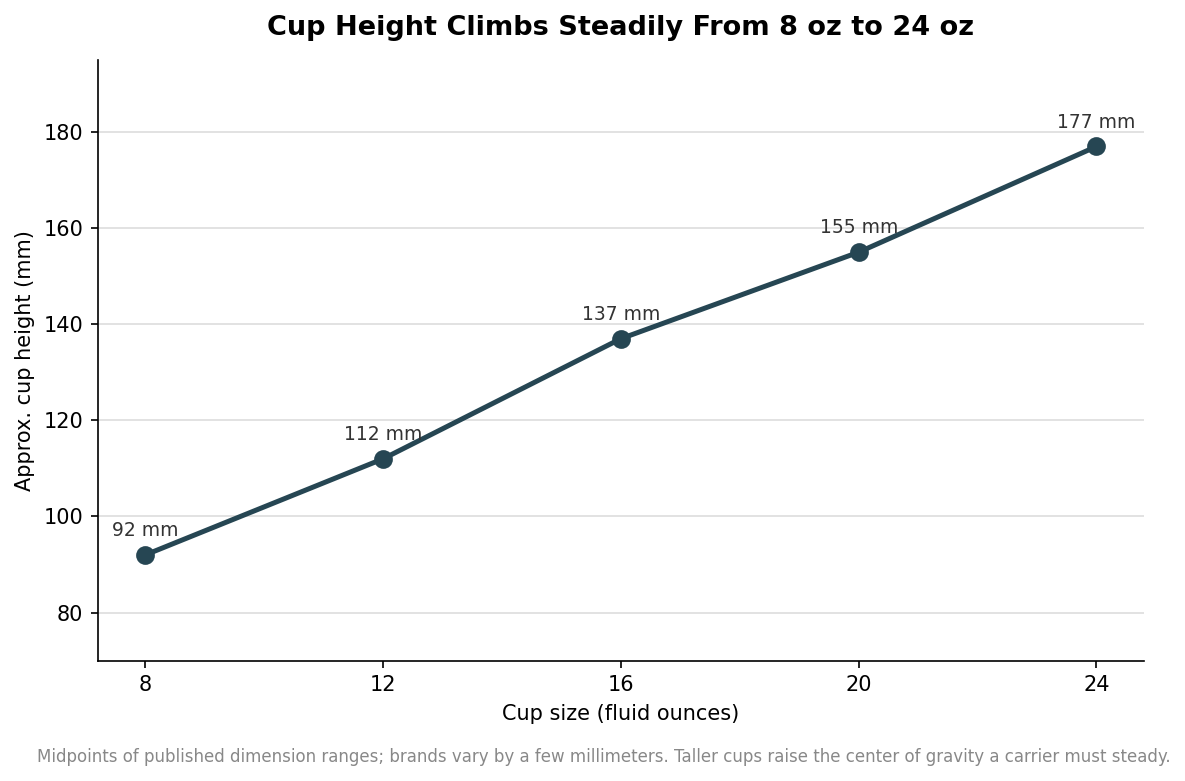
A carrier that grips well can still deliver a tipped drink. As cups scale up in volume they grow much taller, from around ninety millimeters at 8 oz to well over one hundred and seventy at 24 oz, and that added height lifts the center of gravity the carrier has to steady. A tray that feels stable with short cups can let tall ones sway and topple, especially when they are only partly filled or capped with a tall domed lid. If your menu skews toward large iced drinks, choose a carrier with deeper cup wells or a higher collar that holds the cup lower down its body, and test it with your tallest cup and lid combination rather than a mid-size sample.
Mistake 3: Choosing the wrong material for the conditions
Moisture is the enemy, and not every board fights it equally. Molded pulp fiber handles heat and dampness well and keeps its grip when a hot cup sweats or a lid drips, which is why it dominates cafe and drive-through use. Uncoated or lightweight paperboard can soften as it absorbs condensation from iced drinks or steam from hot ones, and a carrier that goes limp mid-transport is worse than no carrier at all. Cold-drink programs are especially unforgiving because condensation runs down the cup and pools in the tray, so match the material to the drink: prioritize wet strength for iced and hot beverages, and do not assume a stiff, dry sample tells you how the tray behaves once real drinks start weeping into it.
Mistake 4: Ordering the wrong capacity mix
The default four-cup tray is not always the right one. Carriers come mainly in two- and four-cup configurations, and buyers often standardize on the four-cup unit because it seems more versatile. The catch is that a four-cup tray carrying a single drink is unstable, because the lone cup sits off-center with nothing to brace against, and it also wastes material and counter space on every one- and two-drink order. If most of your tickets are one or two beverages, a two-cup carrier will be steadier and cheaper for the bulk of your volume, with four-cup trays kept on hand for the larger orders. Look at your actual order mix before you commit to a single format, and consider stocking both rather than forcing every order into one size.
Mistake 5: Treating branding as an afterthought
The surface you print on decides how good your logo looks. A cup carrier is prime brand real estate that a customer carries through a parking lot and holds at a doorstep, but the two common materials print very differently. Molded pulp has a textured, curved, absorbent surface that suits simple one- or two-color marks and soft, earthy branding, while it struggles with fine detail and crisp edges. Paperboard offers a smoother, flatter face that holds sharper, more colorful printing, so if a detailed full-color logo is central to your brand, factor that into the material choice rather than discovering the limitation after the proof. Custom printing also carries its own minimum order quantities and lead times that run longer than buying blank stock, so build that runway into your timeline, and design within the tray’s real print area instead of assuming a mockup’s flat artboard will wrap cleanly onto a molded, contoured surface.
None of these mistakes are exotic, which is exactly why they are so common. Confirm the rim and base of the cups you actually serve, account for the height of your tallest drink, match the material to the moisture it will face, size the capacity to your real order mix, and choose the material with your branding in mind. Run through those five checks before you approve a custom cup carrier order and the tray will do its one job every time, which is the only performance metric your customers will ever notice.
Leave a Reply